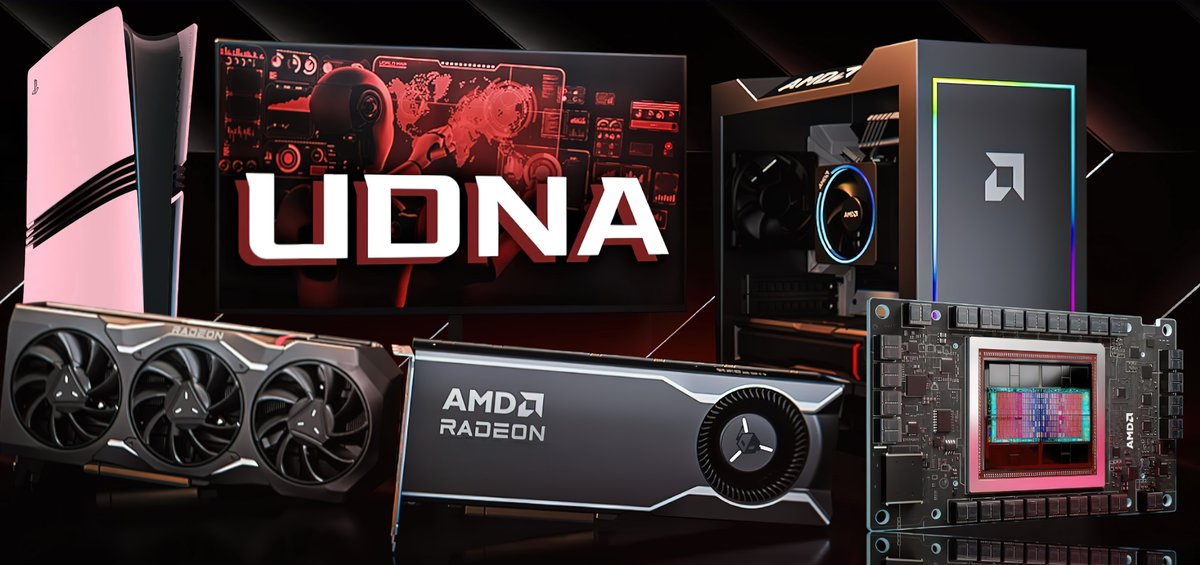
The future of Xbox gaming is taking shape, and a quiet revolution is brewing in the silicon that powers it. Xbox isn't just building a new console; it's crafting an entire gaming ecosystem—from next-gen consoles and handhelds to PCs, cloud services, and accessories. At the very heart of this ambitious endeavor is a strategic, multi-year partnership with AMD, signaling a significant evolution in AMD's Role in Next-Gen Xbox Architecture. This isn't merely a vendor relationship; it's a co-engineering alliance poised to redefine how we play.
This collaboration aims to deliver a unified, enduring gaming platform that frees players from the confines of a single store or specific hardware. Think of it as a grand strategy for seamless gaming across all your devices, orchestrated by two tech titans.
At a Glance: What This Alliance Means for Your Gaming Future
- Deep Partnership: Xbox and AMD are actively co-engineering silicon for future consoles, handhelds, PCs, and cloud infrastructure.
- AI-Enhanced Chips: The core innovation lies in specialized chips integrating AI directly to boost graphics, physics, and overall performance.
- Unprecedented Gamer Benefits: Expect enhanced visuals, smoother gameplay, faster loading, and truly innovative new game features.
- Multi-Device Freedom: The goal is an enduring gaming platform that lets you experience Xbox across all your devices, not just a single console.
- Building on Success: This partnership extends AMD's proven track record, evolving from the custom processors in current Xbox Series X/S consoles.
A Strategic Alliance Forged in Silicon: Defining Next-Gen Xbox
When Xbox President Sarah Bond and AMD Chair and CEO Lisa Su confirmed their alliance, it wasn't just another press release; it was a clear signal of the industry's direction. This isn't a transactional deal; it's a deep, strategic commitment to innovation. Xbox is investing in a future where your gaming experience is fluid, accessible, and high-performance, regardless of the device you choose.
The Vision: Gaming Without Boundaries
The scope of this partnership is impressively broad. AMD is extending its expertise to design a comprehensive roadmap of gaming-optimized chips, combining the brute force of Ryzen CPUs and the graphical prowess of Radeon GPUs. These aren't just for a flagship console; they're destined for an entire family of devices: future first-party consoles, handheld gaming devices, PCs, and the sprawling cloud infrastructure that powers Xbox Cloud Gaming.
Imagine starting a game on your next-gen Xbox, picking it up seamlessly on a powerful Xbox-branded handheld during your commute, and then continuing on your gaming PC, all powered by a shared, optimized silicon foundation. This holistic approach means that whether you're playing locally or streaming from the cloud, the underlying hardware—co-engineered by AMD—is purpose-built for gaming excellence. Furthermore, this initiative sees Xbox and Windows working hand-in-hand, ensuring that Windows remains an unparalleled platform for gaming, leveraging this same advanced silicon. The ambition here is to create an enduring gaming platform where the lines between devices blur, offering unparalleled flexibility to players.
AI at the Core: The Brains Behind Next-Gen Performance
At the heart of this strategic alliance lies a truly transformative leap: the creation of specialized AI-enhanced chips for Xbox’s next-generation hardware. This isn't about adding a small AI feature; it's about embedding intelligence directly into the very silicon that runs your games. It's a fundamental shift in how gaming hardware is conceived and engineered.
Specialized AI Chips: A Game-Changer
Why integrate AI directly into the silicon? The answer is simple: unparalleled optimization. By building AI capabilities into the chip itself, Xbox and AMD are unlocking new levels of efficiency and performance. This isn't just a theoretical gain; it's designed to manifest in tangible improvements across the entire gaming experience. AI in silicon can dynamically optimize graphics processing, intelligently enhance game physics for more realistic interactions, and streamline overall system performance in ways traditional hardware simply can't.
Think of it as having a highly intelligent co-processor constantly analyzing and optimizing every aspect of your game in real-time. This deep integration allows the system to make smart decisions on the fly, allocating resources precisely where they're needed most, reducing bottlenecks, and pushing the boundaries of what's visually and interactively possible.
The Gamer's Edge: Tangible Benefits
For you, the gamer, these advancements translate into a suite of exciting benefits:
- Enhanced Visual Fidelity: Games will look more stunning than ever before. Expect hyper-realistic lighting, incredibly detailed textures, and dynamic environments that respond with lifelike accuracy. AI can render more complex scenes and effects without sacrificing frame rates, leading to breathtaking visuals.
- Smoother Gameplay: Lag and stutter will become relics of the past. The AI-enhanced chips will ensure consistently high frame rates, even in the most action-packed or graphically demanding sequences. This means more responsive controls and a fluid, immersive experience from start to finish.
- Reduced Loading Times: Waiting for games to load can be a frustrating experience. AI integration aims to streamline data transfer and processing, drastically cutting down loading screens and getting you into the action faster.
- Innovative New Features: Perhaps the most exciting aspect is the potential for entirely new gameplay mechanics and experiences that weren't feasible before. AI could power more sophisticated enemy behaviors, dynamic world generation, or even personalized game experiences that adapt to your playstyle. This is where the real "next-gen" magic will happen.
Evolution, Not Revolution: Building on AMD's Proven Track Record
This forward-looking partnership isn't starting from scratch. It builds upon a robust foundation established with the current generation of Xbox consoles. AMD's expertise is already deeply woven into the fabric of your Xbox Series X and Series S, proving their capability to deliver high-performance, custom solutions.
From Current-Gen Powerhouses to Future Frontiers
Today's Xbox Series X and Series S consoles are already powered by custom AMD processors. These utilize cutting-edge Ryzen CPUs for their processing muscle and RDNA (Radeon DNA)-based GPUs for their graphical prowess. This architecture has been instrumental in delivering the current generation's leap in visual quality and performance.
The Xbox Series X, for instance, leverages the RDNA 2 architecture to provide features that were once the domain of high-end PCs. This includes:
- Ray Tracing: For incredibly realistic lighting, shadows, and reflections, making game worlds feel more tangible and immersive.
- Variable Rate Shading (VRS): An optimization technique that allows the GPU to focus its rendering power on the most visually important parts of the scene, while using fewer resources on less critical areas. This boosts performance with minimal impact on perceived quality.
- AMD FidelityFX: A suite of open-source image quality technologies designed to enhance visuals and, crucially, includes AI acceleration features that lay the groundwork for future AI-driven improvements.
Looking ahead, the upcoming RDNA 3 architecture is expected to introduce further significant advancements, pushing the boundaries of graphical rendering and efficiency even further. This iterative improvement, combined with the dedicated AI silicon, forms a potent combination for the next wave of Xbox hardware.
Beyond Pixels: How AI Transforms Gameplay and Immersion
AMD's integration of AI technologies, particularly machine learning, is poised to go far beyond just pushing more pixels. It's about enhancing the very fabric of gameplay, creating more responsive, dynamic, and believable game worlds. This is where AI moves from a technical specification to a palpable improvement in your gaming experience.
FidelityFX Super Resolution (FSR): Clarity at Speed
One of the most immediate and impactful applications of AI in gaming is upscaling technology, and AMD's FidelityFX Super Resolution (FSR) is a prime example. Imagine your console rendering a game at a lower, easier-to-process resolution, and then, in a blink, using AI to intelligently reconstruct it to a much higher resolution – say, from 1080p to a crisp 4K. That's the power of FSR.
This AI-powered upscaling delivers higher resolutions and significantly improved frame rates with minimal impact on visual quality. It's like having a brilliant artist in your console, taking a sketch and, using their vast knowledge, filling in the details to create a masterpiece, all in real-time. For gamers, this means enjoying stunning visuals without having to compromise on smooth, fluid performance, even on demanding titles.
Intelligent Worlds: NPCs and Dynamic Environments
But AI's influence extends far beyond just how things look. It fundamentally changes how games feel. AI contributes to creating more realistic and engaging non-player character (NPC) behavior. Instead of pre-scripted, predictable movements, imagine NPCs that learn from your actions, adapt their strategies, and engage in more complex, believable interactions. This makes game worlds feel more alive, more challenging, and ultimately, more rewarding to explore.
Furthermore, AI optimizes dynamic lighting and effects in real-time. This means environments can react more intelligently to your presence, to changing weather, or to in-game events. Shadows might deepen realistically as a storm gathers, or a battle's explosions could dynamically illuminate an entire area with startling realism. These nuances create more immersive game worlds that pull you deeper into the experience. To truly appreciate the breadth of this ongoing innovation, you might want to Explore AMD Microsoft Xbox Future and see how these partnerships are shaping the entire industry.
The Broader Horizon: Xbox's Ecosystem Vision with AMD
The partnership between Xbox and AMD isn't just about silicon; it's about architecting an entire ecosystem that offers unprecedented flexibility and choice to players. The next-generation Xbox, whatever form it takes, is envisioned as a central pillar in a much larger gaming universe, where hardware and software work in concert to remove barriers.
Expanding the Gaming Universe: What to Expect
While details of the next-gen hardware remain under wraps, speculation—fueled by Xbox's stated goals and industry trends—points to several exciting possibilities, all of which benefit from AMD's flexible, high-performance silicon:
- Hardware-Level Backward Compatibility: Ensuring that your existing game library, from original Xbox titles to Series X/S games, remains playable and perhaps even enhanced on new hardware. This focus on preservation and continuity is a hallmark of the Xbox philosophy, and AMD's architectural consistency helps enable it.
- A PC-Like Architecture: There's a strong possibility that next-gen Xbox hardware could adopt an even more PC-like architecture. This might involve running a version of Windows, which could significantly streamline game development across PC and console, reducing costs and accelerating release schedules. Such an architecture would also foster cross-platform compatibility, making it easier for developers to target multiple devices.
- Steam Integration: Imagine having direct access to a broad PC game library through platforms like Steam on your Xbox console. This would be a monumental shift, blurring the lines between console and PC gaming and offering players an unprecedented choice of titles. AMD's pervasive presence in both PC and console hardware makes them an ideal partner for bridging these ecosystems.
These elements collectively paint a picture of a future Xbox platform that is more open, more powerful, and more connected than ever before, all built on a foundation of AMD-engineered silicon designed for versatility and performance.
The Road Ahead: Deeper Integration and Unlocking New Possibilities
The ongoing partnership between Xbox and AMD isn't a one-off project; it's a living, evolving collaboration that promises continuous innovation. This long-term commitment signifies a future of relentless optimization, deeper integration of advanced features, and groundbreaking advancements that will redefine cloud gaming and game development itself.
Continuous Optimization: A Partnership Built for the Future
Expect to see sustained efforts in optimizing every facet of the gaming experience. This includes refined performance, enhanced efficiency, and an ever-improving power-to-performance ratio for the silicon. Deeper integration of advanced AI features will be a constant focus, particularly for further evolved upscaling techniques that push visual fidelity even higher while maintaining fluid frame rates. Imagine FSR not just upscaling, but intelligently adding detail that wasn't present in the original render, creating a truly hyper-realistic experience.
Significant advancements in cloud gaming experiences are also on the horizon. With AMD's chips powering both local consoles and the cloud infrastructure, the vision of truly seamless, high-fidelity streaming becomes more attainable. The goal is to make cloud gaming indistinguishable from playing locally, with minimal latency and maximum visual quality, accessible on any device.
AI Beyond Gameplay: Empowering Creation and Experience
The long-term focus extends AI beyond just the runtime experience of playing a game. Xbox and AMD are looking to embed AI more thoroughly into the entire gaming process, from initial concept to final release. This means leveraging AI in game development tools to:
- Create Expansive Worlds: AI could assist artists and designers in procedurally generating vast, intricate, and believable game environments more efficiently than ever before, freeing up creative teams to focus on unique elements.
- Design Intricate Characters: Developing complex, lifelike characters with nuanced animations and intelligent behaviors could be streamlined, allowing developers to craft more engaging personalities and interactions.
Ultimately, this means AI will not only enhance the gameplay experience itself, making worlds more dynamic and NPCs more intelligent, but it will also empower developers to build richer, more ambitious games with greater ease. This holistic integration of AI, from creation to consumption, truly represents the next frontier of gaming.
What Does This Mean for You, the Gamer?
The strategic alliance between Xbox and AMD isn't just industry news; it's a direct promise to you, the player. It means a future where your games look better, play smoother, and load faster, thanks to specialized AI-enhanced silicon working tirelessly behind the scenes. It means more immersive worlds, more intelligent characters, and potentially entirely new gameplay experiences that blur the lines between reality and the virtual.
But perhaps most importantly, it means freedom. Freedom to play your Xbox games on a wide range of devices—be it a console, a handheld, a PC, or streamed from the cloud—all while benefiting from a unified, high-performance architecture. This partnership is building a future where your gaming journey is truly unconfined, setting the stage for an exciting new era of digital entertainment. The future of Xbox is bright, and AMD's innovations are at its very core.